

Also available in:
 Deutsch (German)
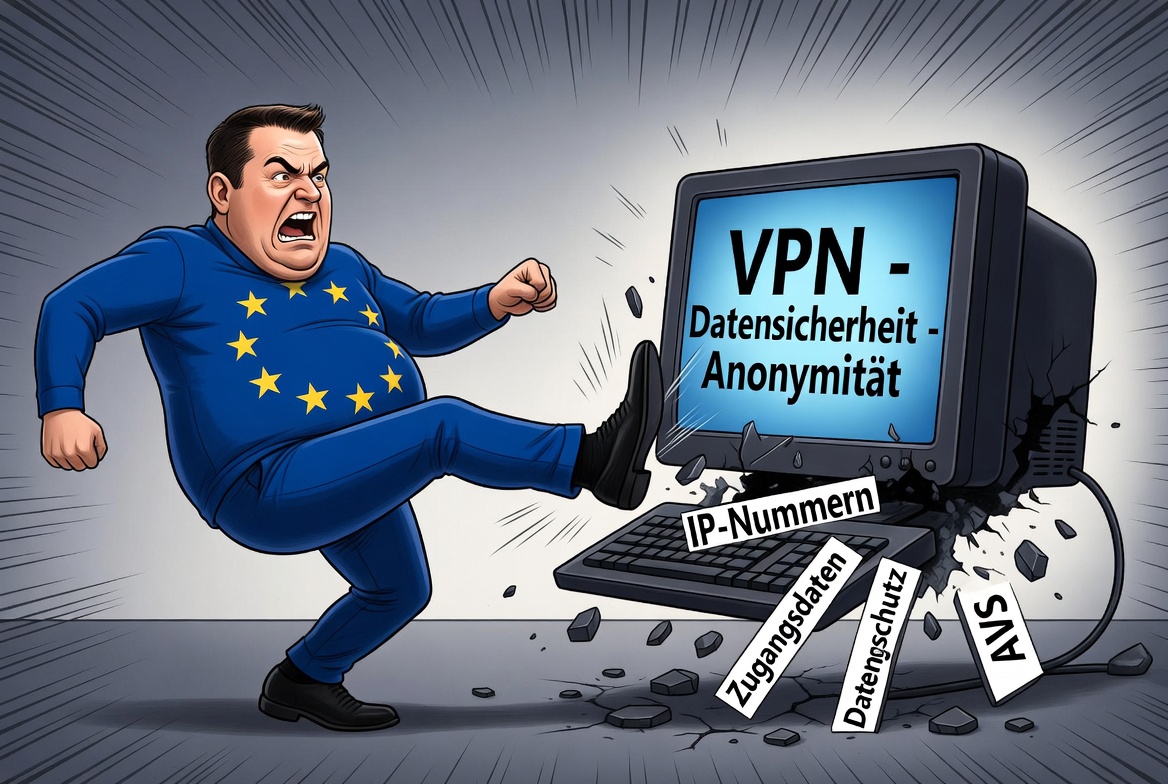
The European Union is steering its current regulatory policy towards a model that shows alarming parallels to authoritarian regimes. While an official ban on VPN usage for end users has not yet been formally proposed, the signals from Brussels are unmistakable: the planned EU-wide age verification system must not be circumventable via VPNs. In doing so, the EU is planning restrictions on anonymization technologies similar to those already in place in North Korea – a country where VPNs and uncontrolled internet access have long been largely prohibited for the population and are punished with severe penalties.
Anonymity as the Foundation of the Industry Under Attack
For providers of adult platforms, live cam portals, Fanportals and user-generated content services, the free use of VPNs has been a central success factor. A significant portion of both paying and non-paying users in Europe deliberately use VPN services to maintain discretion, avoid local monitoring, and bypass geoblocking. It is precisely this anonymity that is now to be systematically restricted.
Executive Vice-President Henna Virkkunen has made it clear that the European Age Verification Solution (scheduled for comprehensive rollout by the end of 2026) should prevent VPN circumvention in the future. At the same time, the EU is preparing a new data retention directive that would force VPN providers to store metadata (IP addresses, connection times, etc.) for 6–12 months. Genuine no-log VPNs would thereby become largely impossible within the EU.
Massive Impact on Business Models
This development threatens established business models in the industry on several levels:
- Dramatic Decline in Traffic and Revenue
Experiences from France and the United Kingdom already show that strict age verification leads to significant drops in visitor numbers. Many users abandon the process or switch to alternatives. If VPN access is now additionally restricted or blocked, this effect will be dramatically amplified. - Exploding Compliance Costs and Liability Risks
Under the Digital Services Act (DSA), fines of up to 6% of global turnover are threatened. Platforms that do not actively combat VPN circumvention risk legal proceedings and market access restrictions. Smaller and medium-sized providers will be hit particularly hard. - Market Displacement
EU-based or EU-proximate providers will lose ground to international players operating in more regulatorily friendly regions. - Long-term Digital Control
The combination of mandatory age verification, VPN restrictions, and data retention creates a surveillance environment that removes the foundation for discreet, spontaneous consumption from the industry.
Possible Circumvention Strategies for Providers
In the face of this threat, the industry is intensively discussing adaptive and resilient models. The following approaches are currently being examined:
- Strong Internationalization and Mirror Sites
Operating completely separate platform versions outside EU jurisdiction with minimal access barriers. EU users receive discreet hints about privacy-friendly access methods (without direct violation of the law). - Decentralized and Blockchain-based Solutions
Building web3 platforms or token-controlled access systems that are technically more difficult to regulate centrally. However, this requires high investment and carries new regulatory risks (e.g., in the financial sector). - Technical Workarounds
Use of advanced proxy and obfuscation technologies, cooperation with VPN providers outside the EU, and the development of the most data-minimal zero-knowledge age verification methods to reduce regulatory pressure. - Market and Product Diversification
Strong focus on non-EU markets, direct creator-to-consumer models, and the development of offerings that fall less obviously under adult regulations.
Important Note: All circumvention strategies must be carefully reviewed by legal experts. Openly encouraging systematic circumvention of EU law can itself create significant liability risks.
Conclusion: Time to Act
With the planned VPN restrictions, the EU is approaching a level of control previously known mainly from authoritarian states like North Korea – albeit with different methods and in a democratic guise. For the online erotica industry, this raises an existential question: Can anonymous, paid adult content still be operated economically in Europe in the long term?
Providers who now consistently invest in international structures, innovative technologies, and political advocacy still have a chance. Those who wait too long risk being overrun by the wave of regulation.
The next 12–18 months will decide the future of many business models.
